

A new generation of computer technology is emerging that many believe will ultimately increase the computing power available to humanity. If it happens, it could dramatically speed up many critical tasks, such as discovering and testing new drugs or understanding the impact of climate change. Quantum computing and quantum computers are with us in limited form right now. But in the next five to ten years, we may see them leap into the mainstream, much in the same way that classical computers moved from labs and large corporations to global businesses.
Fixing system security issues
This technology can play a significant role in addressing problems in system security. In addition to the huge leaps in what we can do with computers, they also require us to confront a new set of problems, particularly regarding the threats they pose to security and encryption.
Some people think that, in fact, quantum computers and quantum computing will never be useful due to the complexity and limited number of tasks for which they have been shown to be superior to classical computer technology.

What is quantum computing?
Like anything related to the quantum (subatomic) realm, quantum computing and computers aren’t the easiest concepts to get your head around. Essentially, the term describes a new (or future) generation of ultra-fast computers that process information as “qubits” (quantum bits) rather than the regular bits—ones and zeros—of classical computing.
Classical computers are really much more sophisticated versions of pocket calculators. They are based on electrical circuits and switches that can be on (one) or off (zero). By stringing together a large number of these ones and zeros, they can store and process any information.
However, their speed is always limited by the fact that large amounts of information require a large number of ones and zeros to represent it. Instead of being simple ones and zeros, quantum computing qubits can exist in many different states.
Applications of Quantum Computers
Quantum computers could have much broader applications. Given the strange properties of quantum mechanics, this could mean that they could exist as both a one and a zero at the same time. They could also exist in any state between one and zero.
This means you can process more information on a quantum computer, and that means you can do some problems much faster. However, there is an important caveat. Right now, quantum computers are only really useful for a limited set of applications.
Don’t expect to be able to simply plug a quantum processor into your MacBook and do everything you can do on it now, millions of times faster.
Chat GPT generates human-like responses through text. It has the ability to answer questions in a clear and conversational tone. The bot can generate codes, write stories, poems, and literary texts. It provides natural responses to generate answers in the way a human would.
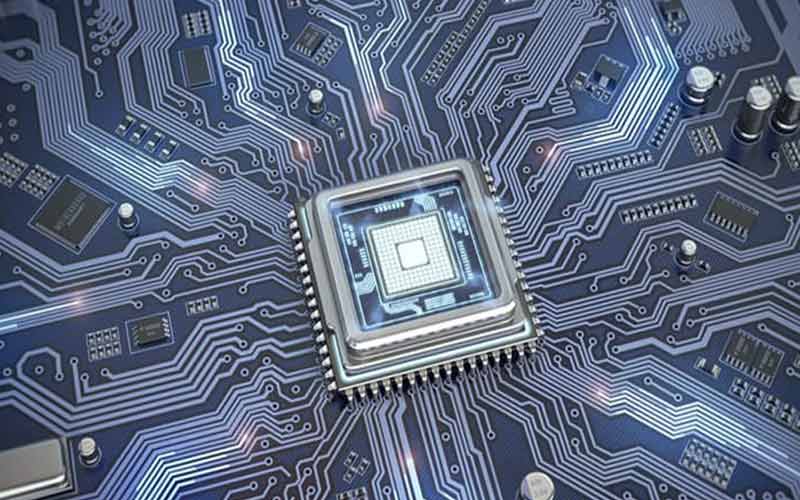
Comparing quantum and classical computing
What can quantum computing do better than classical computing? The truth is that classical computers can simplify all the problems that quantum computers solve. There is nothing yet discovered for quantum computers that cannot already be done with classical computers.
In particular, they are potentially useful for a set of well-known problems, such as optimization problems. Elementary mathematics can show us that as soon as there are more than a few cities, the number of possible routes becomes incredibly large.
This means that if we use classical binary calculations, calculating the distance and time taken for all of them to find the fastest one can take up a lot of processing power.
This has implications for areas as diverse as tracking and routing financial transactions across global financial networks, developing new materials by manipulating physical or genetic properties, or even understanding how changing weather patterns affect the world around us.
What are the challenges surrounding quantum computing?
First, there are some fast physics challenges that need to be solved. The qubits themselves, when they exist in a physical state, as is necessary to represent data and allow computations to be performed, are very unstable. This means that they must be kept in an ultra-cold environment, even for a few nanoseconds, before they can be used.
On the other hand, quantum computers are currently very expensive, and only the largest companies and research organizations with the best budgets can afford to own them. This means that evaluating use cases is also a costly and time-consuming process.
It has also been suggested that cosmic rays could be a barrier to the widespread adoption of quantum computing. Furthermore, errors caused by phenomena that can affect even classical computation could affect the extremely sensitive engineering required to harness qubits on a large scale.
There is also a severe shortage of people with the skills to develop and work with quantum computers. What you want is someone who is a computer scientist and a physicist, and an expert in pharmaceuticals or finance.
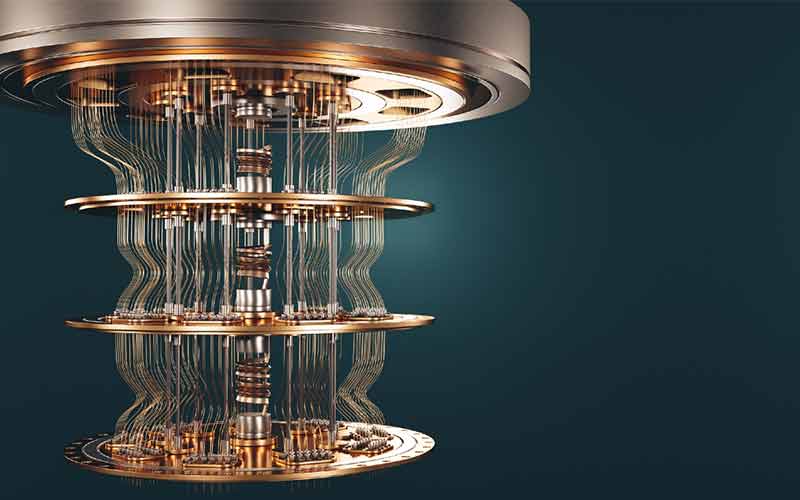
Applications of Quantum Computers
The application of Quantum computers in the near future is becoming quite clear. Quantum computing is a relatively new and future-oriented technology that uses the principles of quantum physics to solve complex problems. While still in the early stages of development, the possibilities and results so far indicate that this technology has a promising future in real-world applications.
Large companies such as IBM, JP Morgan Chase, Microsoft and Volkswagen, and countries such as Japan, China and the United States have begun in-depth research into this sought-after technology.