

Genomics, or genetic mutations, are changes in your DNA sequence that occur during cell division when your body’s cells copy themselves. DNA tells your body how to form and function. Genetic mutations in living organisms can lead to genetic diseases, such as cancer, or help humans better adapt to their environment over time.
What is genomics or genetic mutations?
A genomic or genetic mutation is a change in a sequence of DNA. The DNA sequence gives the body’s cells the information they need to perform their functions. When part of the DNA sequence is not in the correct position or is incomplete, the symptoms of a genetic disease will develop.
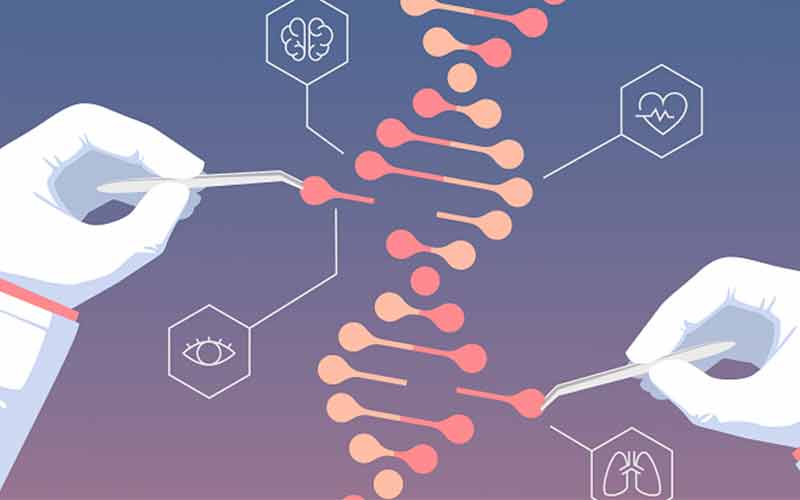
The impact of genomic drugs
Genomic medicine will have a transformative impact on personal health and well-being, health economics, and national productivity. In recent years, there has been a tremendous leap forward in understanding the human genome and its role in health and disease. Understanding the genetic mutations of living organisms has been made possible by unprecedented advances in sequencing technologies, which can now sequence an individual’s entire genome, which is over 6,000 million bases, in a matter of days.
Understanding genomic data requires computational technologies and databases to evolve in parallel with sequencing technologies. Advances in both technologies are enabling an ever-increasing capacity to accurately diagnose existing diseases and develop effective and targeted therapeutic strategies.
They also offer opportunities to assess disease susceptibility, potentially prompting further clinical monitoring and lifestyle changes.
New technologies in genomics and genetic mutation of living organisms
New technologies in genomics and genetic mutation of living organisms are enabling greater mastery of the genomic understanding of humans and other living organisms in the future. The project’s research strategies and new experimental technologies have generated a steady stream of larger and more complex genomic data sets that are being poured into public databases, revolutionizing the study of all life processes.
The genomic approach to technology development and the large-scale generation of community-sourced datasets have introduced an important new dimension in biological and biomedical research. Interwoven advances in genetics, comparative genomics, high-throughput biochemistry, and bioinformatics provide biologists with an improved set of research tools.
This technology of genetic mutation in living organisms allows us to analyze and understand the functioning of organisms in health and disease at an unprecedented level of molecular detail. Genome sequences, the limited sets of information that guide biological development and function, are at the heart of this transformation. In short, genomics has become a central and coherent discipline in biomedical research. To access new technologies, you can follow RebinWeb.